
What is Corneal Cross-Linking?
Gradual thinning and weakening of the cornea, the clear front surface of the eye, can cause it to bulge into a conical shape leading to distorted vision and difficulty seeing. This condition is called keratoconus.
Corneal cross-linking is a minimally invasive treatment which uses a combination of vitamin B2 or riboflavin and ultraviolet (UV) light to treat keratoconus.
Corneal cross-linking creates new bonds between the collagen fibers which strengthen the fibers and help keep the cornea stable, preventing further bulging.
What are the Indications of Corneal cross-linking?
Corneal cross-linking is usually recommended for the treatment of keratoconus, or other similar conditions affecting the cornea. Your eye doctor will perform an initial exam to see if you are a candidate for the procedure.
Preparation
Before the procedure, you will be advised not to apply any makeup, perfume or after-shave. However, you can drink fluids and eat a light meal.
How is Corneal Cross-Linking performed?
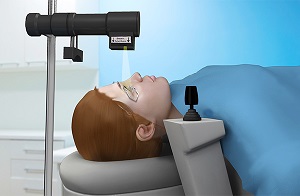
Corneal cross-linking is performed as an outpatient procedure. You will be given mild sedation along with local anesthetic drops in your eye so you don’t feel any pain. Then an eye drop, usually vitamin B2 or riboflavin will be administered to help your cornea absorb light. The eye drop will be absorbed in the cornea within 30 minutes. Then, you will be placed in a reclining position so your surgeon can focus ultraviolet light directly onto your cornea for a period of time. The entire procedure may take around 60-90 minutes.
What are the Types of Corneal Cross-Linking?
There are two types of corneal cross-linking:
epi-off and epi-on. Epi refers to the epithelium, which is the outer layer of the cornea.
- In the epi-off technique, your doctor removes the epithelium before putting the eye drops in.
- In the epi-on technique, your doctor loosens the epithelium before administering the eye drops.
This has fewer side effects compared to epi-off.
Postoperative Care for Corneal Cross-Linking
You will be given post-op instructions depending on the type of procedure you underwent. You will need to arrange for someone to drive you home following the procedure.
The epi-on technique offers a quicker and painless recovery. Your vision is usually back to baseline within a day. You’ll be able to wear your contact lenses as soon as the next day and resume your regular activities as well.
If you had an epi-off procedure, you may have eye pain lasting several days. You should take pain medications as prescribed by your doctor and avoid rubbing your eyes. It may take 4-10 days to resume your usual routine. Complete healing of the epithelium may take several weeks. Post-operative instructions for the epi-off procedure may include the following:
You may be required to wear a soft contact lens for about a week after epi-off surgery.
If your contact lens falls out, you should call your doctor immediately. Do not put it back yourself.
You will be given steroid eye drops and antibiotic drops for up to 2 weeks.
You can wear your regular contacts again after about 2-4 weeks.
You may expect some changes in your vision over the next 3-6 months.
What are the Risks and Complications of Corneal Cross-Linking?
Although corneal cross-linking is a safe technique, as with any procedure it can sometimes cause certain problems including:
- Pain, infection or swelling in the eye
- Vision problems such as blurred or hazy vision
- Damage to the epithelium or cornea
For more information about our services or to schedule an appointment, call us at or request an appointment online. We’ll respond to you as soon as possible.